Why Most People Quit Their Fitness Routine After 6 Weeks and How to Break the Cycle
May 1, 2026
by Jason Lee
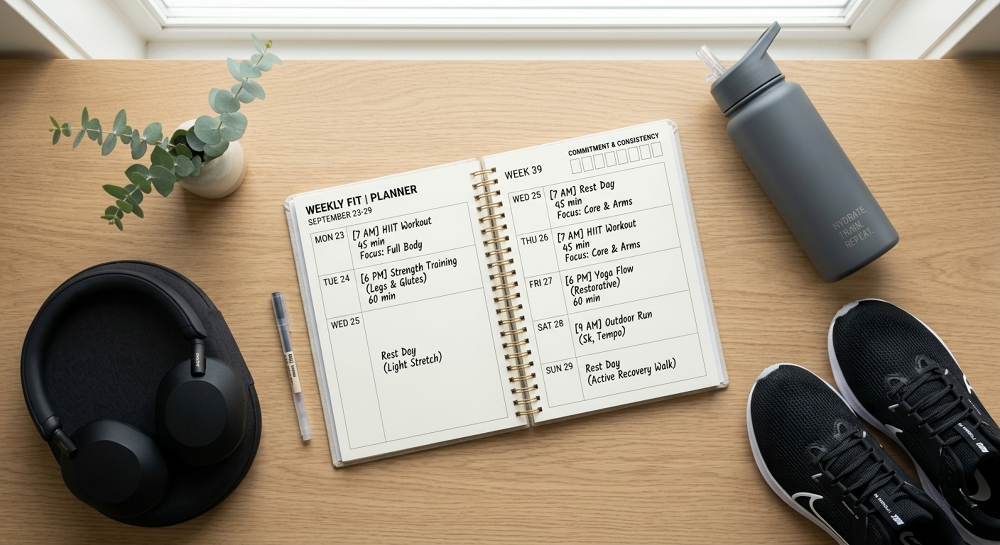
Everyone starts motivated.
New plan. New routine. Maybe even a new gear. The first couple of weeks feel productive. You show up, you sweat, and you feel like you are finally doing something right.
Then something shifts.
Work gets busy. Energy drops. Workouts feel harder instead of easier. You skip a day, then two. Before you know it, you are back at square one.
This is not a discipline problem.
It is a system problem.
Why This Happens More Often Than People Admit
Most people do not quit because they are lazy.
They quit because the plan they are following stops working in real life.
The first few weeks of any program feel good because everything is new. But once the novelty wears off, reality kicks in.
You are tired. Sore. Busy. And not seeing the results you expected yet.
Without structure and guidance, this is where people fall off.
What Most People Get Wrong
The biggest mistake is thinking motivation will carry you.
It will not.
Motivation is unreliable. It is high when you start, and disappears the moment things get inconvenient.
Here is what usually goes wrong.
They Start Too Aggressively
Six days a week. Long workouts. Major changes overnight.
This works for about two weeks.
Then fatigue builds up, soreness lingers, and life gets in the way. Instead of adjusting, people stop completely.
They Follow Random Workouts
Jumping from one workout to another feels productive, but it creates no real progress.
There is no progression. No structure. No plan.
Without a clear direction, your body has no reason to adapt.
They Expect Fast Results
If the scale does not move quickly or the mirror does not change, people assume the program is not working.
So they switch programs.
And start the cycle again.
They Train Alone Without Accountability
When nobody is expecting you to show up, it becomes easy to skip.
One missed session turns into a week. A week turns into a month.
Consistency breaks down quietly.
What Actually Keeps People Consistent
Consistency is not built on motivation. It is built on a structure.
People who stay consistent past the six-week mark usually have a few things in place.
1. A Structured Program That Progresses
Your workouts should build on each other.
Not random. Not guesswork.
A real program adjusts intensity, volume, and movement patterns over time so your body keeps adapting.
This is exactly how Metabolic Training Programs at Turbo Metabolic Training are designed. Each session has a purpose, and every week builds on the last.
2. Training That Fits Real Life
If your program requires perfect conditions, it will fail.
Work will get busy. Energy will fluctuate.
Your training needs to be efficient and flexible enough to fit into your schedule without overwhelming it.
That is why shorter, high-quality sessions outperform long, inconsistent ones.
With High Intensity Group Training Sessions, you get effective workouts without needing hours in the gym.
3. Accountability That Removes Guesswork
When someone is expecting you to show up, you show up.
When someone is guiding your training, you stop second-guessing.
Accountability turns intention into action.
Programs like Personalized Coaching and Accountability Programs make consistency easier because you are not doing it alone.
4. Realistic Expectations About Progress
Results do not happen in two weeks.
But they also do not take forever if you are doing the right things.
The people who succeed understand this:
- Progress is not linear
- Some weeks feel harder than others
- Consistency matters more than perfection
This mindset keeps them moving forward when others quit.
What This Looks Like in Real Life
Let’s break this down into a simple comparison.
Person A
- Starts training aggressively
- Works out five to six times per week
- Feels exhausted by week three
- Misses a few sessions
- Stops completely by week six
Person B
- Starts with a structured plan
- Trains three to four times per week
- Builds gradually
- Has coaching and accountability
- Keeps showing up even on busy weeks
At week six, Person A is restarting.
Person B is progressing.
That is the difference.
A Simple Framework to Stay Consistent Past 6 Weeks
If you want to break the cycle, focus on this.
Step 1: Commit to a Schedule You Can Actually Maintain
Not the perfect plan. The realistic one.
Three consistent sessions beat six inconsistent ones.
Step 2: Follow a Structured Program
Stop guessing.
Your workouts should have progression built in. If they do not, you are relying on effort instead of strategy.
Step 3: Build Accountability Into Your Routine
Train in an environment where people expect you to show up.
This removes the need to rely on motivation.
Step 4: Track Progress Beyond the Scale
Strength improvements
Energy levels
Workout performance
These are all signs you are moving forward, even if the scale is slow.
Step 5: Expect Resistance
There will be weeks when you do not feel like training.
That is normal.
Consistency is built by showing up anyway.
Common Mistakes That Keep People Stuck
Trying to “make up” missed workouts instead of staying consistent
Switching programs too early, before results have time to show
Focusing only on weight instead of overall performance
Overcomplicating nutrition instead of building simple habits
Waiting to feel motivated instead of relying on structure
FAQ
Why do most people quit working out after a few weeks?
Because they rely on motivation, start too aggressively, and do not follow a structured plan that fits their lifestyle.
How long does it take to build a consistent routine?
Most people start to build real consistency after six to eight weeks of structured training.
What is the best way to stay consistent with fitness?
Follow a structured program, train in a supportive environment, and commit to a realistic schedule you can maintain.
Is it normal to lose motivation?
Yes. Motivation naturally fluctuates. Systems and structure are what keep you consistent when motivation drops.
How many days per week should I train?
Three to five days per week is effective for most people, depending on their schedule and recovery.
Conclusion: Consistency Is Built, Not Found
Most people are not failing because they lack effort.
They are failing because they are relying on the wrong approach.
If you want to stop starting over, you need:
- Structure
- Accountability
- A program that fits your life
That is exactly what Metabolic Training Programs at Turbo Metabolic Training are built to provide.
You do not need to be more motivated.
You need a better system.